

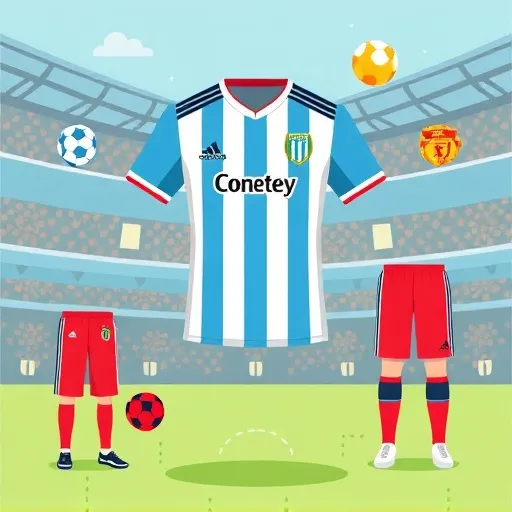
Custom kits now acce
Why Custom Football Kits Matter More Than Ever in 2026
Not long ago, ordering bespoke teamwear felt like something only the big clubs with deep pockets could pull off. That's just not the case anymore. Production tech has leapfrogged forward over the past couple of years, and the gap between off-the-rack jerseys and fully custom football kits has shrunk to the point where pretty much any team can rock a unique identity without blowing the budget.
Put yourself in a player's cleats for a second. Pulling on a shirt built specifically for your squad — your colors, your crest, your sponsor — does something to your head on matchday. It creates belonging. It builds pride. And on the practical side, clubs that go all in on personalized teamwear tend to see better player retention, stronger merchandise sales, and a way more professional brand image when they host fixtures or tournaments.
One industry pro I chatted with recently nailed it: "The kit is the first thing opponents see. It's your visual handshake." That pretty much sums up where the teamwear market is headed in 2026.
Start With Your Club Identity and Brand Colors Before Designing Custom Football Kits
Before you crack open a design tool or mess around with any online kit builder, sit down and map out your club's visual DNA. What colors actually represent you? Got a historic crest that needs honoring, or are you starting from scratch? What's the tone — bold and aggressive, clean and modern, or traditional and understated?
Most custom football kits projects live or die on this foundation. Skip the identity phase and you'll end up with a design that looks sharp on its own but doesn't feel like you once it hits the pitch. Nail your brand identity first, and everything else falls into place.
Choosing Between an Online Kit Builder and Professional Design Services for Custom Football Kits
In 2026, there are two main routes for creating personalized teamwear:
- Online kit builders — slick platforms where you can drag, drop, and preview designs in real time. Perfect for grassroots teams with a clear vision and a tighter budget.
- In-house design services — most reputable suppliers offer these, where a dedicated designer works with you to turn ideas into print-ready artwork. Better for clubs chasing something truly bespoke.
Either way, expect digital mockups before production kicks off. Never approve a design without seeing how it looks on an actual jersey template — front, back, sleeves, and shorts.
Key Design Elements to Lock Down Early for Personalized Teamwear Kits
- Color placement — contrast matters. Dark text on dark fabric is a rookie mistake.
- Crest positioning — left chest is the traditional spot, but plenty of modern designs play with placement.
- Sponsor logos — resolve sizing and color constraints before design lock-in.
- Numbers and names — decide on font style, size, and whether you're using heat-pressed or stitched lettering.
- Patterns and sublimation — sublimated designs let you print full-color patterns across the entire kit, and this tech has become way more accessible in recent seasons.
Fabric Technology and Material Upgrades Behind Modern Custom Football Kits
Fabric tech in teamwear has moved fast. In 2026, the standard for quality custom football kits is lightweight, moisture-wicking polyester blends with engineered ventilation zones. If a supplier is still pushing heavy, non-breathable fabrics, that's a red flag.
Here's what to look for:No Deposit Bonus
- Recycled polyester — now mainstream across the industry. Many suppliers source fabrics made from recycled plastic without compromising performance.
- Weight options — lighter fabrics (around 140–150 gsm) suit warm-weather play and speed-focused kits, while slightly heavier options offer durability for contact-heavy training sessions.
- Ventilation panels — laser-cut or mesh zones under the arms and across the back improve airflow significantly.
- Anti-odor and antimicrobial finishes — increasingly common, especially in kits designed for multi-use seasons.
A seasoned club equipment manager once told me the smartest question to ask any supplier: "Can I feel a sample before I commit?" If the answer is no, walk away. Samples tell you more about fabric quality than any spec sheet ever will.
Sizing and Fit Precision for Bulk Custom Football Kits Orders
Here's a truth many teams learn the hard way: a brilliantly designed kit is worthless if half the squad is swimming in it or bursting out of it. Sizing is where custom football kits projects most often go sideways.No Deposit Bonus
Best practice for 2026:
- Request a physical sizing kit or sample pack from your supplier before placing a bulk order.
- Have every player try on sample sizes and record their preferred fit — don't just ask for "medium" or "large."
- Account for goalkeeper cuts, women's-specific fits, and youth sizing if your club spans multiple teams.
- Order one or two spares per size to cover replacements and late joiners.
Sizing charts vary considerably between suppliers, so never assume a size from one brand matches another. Measure actual chest, waist, and length, then match to the supplier's specific chart.
Budget Planning and Cost Factors for Custom Football Kits in 2026
Cost is the question everyone asks, and the honest answer is: it depends. Prices for custom football kits are influenced by order quantity, fabric tier, design complexity, and whether you're ordering full kits (shirt, shorts, socks) or individual pieces.
As a general guide for 2026:No Deposit Bonus
- Grassroots and amateur clubs — expect per-kit pricing that's competitive with mid-range retail, especially at quantities above 15–20 units.
- Semi-professional and academy setups — higher-grade fabrics and more complex sublimation push costs upward, but bulk discounts are significant.
- Design fees — many suppliers include basic design work free with orders, while fully bespoke artwork may carry a separate fee.
One cost-saving tip from an experienced coach: consolidate orders. If your club has multiple age groups, ordering all custom football kits together typically unlocks better pricing than placing separate small orders throughout the season.
Retro Design Trends and Sublimation Patterns Shaping Custom Football Kits
The nostalgia wave is real. Collar styles, simple single-color sashes, and vintage-inspired colorways are showing up across custom football kits at every level of the game. Clubs with long histories are leaning into heritage designs, while newer sides are borrowing retro aesthetics to build instant character.
Full-kit sublimation used to be a premium add-on. In 2026, it's practically standard. Teams are embracing geometric patterns, city-skyline motifs, and abstract textures that wrap seamlessly across shirts and shorts. Because sublimation prints into the fabric rather than on top of it, the design never cracks or peels — a huge durability win for clubs ordering on multi-season cycles.
More clubs are also involving supporters and players in the design process through votes and design competitions. It's a smart engagement play and a marketing win. When players help choose the kit, they wear it with more pride — and they're more likely to buy additional merchandise.
Eco-conscious production has shifted from a nice-to-have to a genuine expectation. Recycled fabrics, reduced-packaging shipping, and local manufacturing partnerships are all factors clubs now weigh when selecting a supplier.
Supplier Vetting Checklist and Reprint Policies for Custom Football Kits
With so many options on the market, here's a practical checklist for evaluating suppliers of custom football kits:
- Sample policy — do they offer physical samples or sizing kits?
- Lead times — what's the realistic turnaround, and do they guarantee it in writing?
- Minimum order quantities — do they accommodate small grassroots clubs or only large clubs?
- Design support — is professional artwork included, or extra?
- Reprint policy — what happens if sizes are wrong or prints are defective?
- Reviews and references — ask for contacts at clubs they've supplied. Real club feedback beats any sales pitch.
One industry specialist I spoke with emphasized patience: "Don't rush the supplier decision. A kit order lasts a season or more, and switching mid-season is painful. Get it right upfront."
Typical lead times in 2026 run from 3 to 6 weeks once design is approved, depending on order size and design complexity. Always factor in a buffer before your season opener — order early and confirm delivery dates in writing. And yes, many suppliers now cater to small squads with lower minimum order quantities than in previous years. If a supplier insists on a large minimum, keep searching — plenty of options exist for smaller clubs.
Quality sublimated and heat-pressed custom football kits are designed for regular washing. Just follow the care label — wash inside out, avoid high heat, and skip fabric softeners to protect prints and stitching. And when it comes to sponsor logos, provide sponsors with a clear template of sizing and placement rules before design begins. Vector files are preferred for print quality. Confirm approval from the sponsor on the final mockup so there are no surprises after production.
At the end of the day, custom football kits are more than fabric and ink — they're identity, motivation, and community rolled into one. Whether you're outfitting a five-a-side social team or a competitive semi-pro side, the process in 2026 is more accessible, more sustainable, and more creatively flexible than it has ever been. Take the time to define your identity, choose a supplier you trust, verify sizing with samples, and don't be afraid to push for a design that genuinely feels like your club. A well-executed personalized teamwear project pays dividends all season long — on the pitch, in the stands, and in the memories your players carry long after the final whistle.